“Pleased but not surprised” was Northern Minerals’ (ASX: NTU) boss George Bauk’s response to AusIndustry’s about-face on its decision to reclaim about $13.4 million in research and development (R&D) tax offsets for FY2016/17 and FY2017/18.
AustIndustry’s review of its initial findings (announced 5 June 2019) found that most activities in Northern Minerals’ R&D tax offset claims were, after all, eligible for the grant.
Northern Minerals has stopped ATO repayments for the $13.4 million stipulated by the initial finding, saying that AusIndustry is expected to reconsider their initial finding and will provide a copy of the notice to the ATO before “confirming the quantum of the final refundable R&D tax offset.”
Going forward, the company has agreed to exclude some minor supporting activities from the claim that were part of previous years’ claims.
“We are pleased but not surprised by the AusIndustry review findings,” Mr Bauk said.
“The company and its advisors worked diligently and submitted claims in respect to the R&D tax offset in line with the assessment criteria provided.
“We committed to initially developing Browns Range as a pilot plant operation as there were no analogues or peer projects to guide us.
“We were always confident that our claims met both the spirit and technical guidelines for assessment.”
Northern Minerals’ share price jumped 2c to 42c on the back of the announcement.
AusIndustry’s ruling last year threatened to hamstring the company which claimed $21.6m in R&D claims for FY18 alone, while AusIndustry advanced it $10.78 million while the claims were still in review.
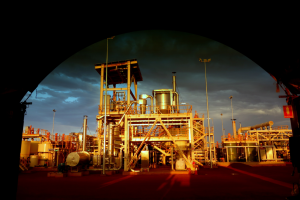
Northern Minerals has reached practical completion of its 100 per cent-owned Browns Range pilot plant and aims to build the operation into the first significant world producer of dysprosium outside of China.
Mr Bauk told investors at the RIU Explorers conference last week that both China and India had set the ambitious goal of transitioning to electric vehicles by 2030, and that there was significant interest in critical minerals both domestically and from abroad.
“The demand for electric vehicles is here, it’s only a matter of when. Each electric vehicle requires 100g of dysprosium,” he said.
“If you really look into the how conversation about it, it’s all about the permanent magnet.
“You’ll find that these [dysprosium and terbium] are the most critical elements in this process.”